
7 Traditional Afghan Foods to Cook at Home

Afghan cuisine sits at one of the great crossroads of the culinary world, drawing on the traditions of Central Asia, Persia, India, and the nomadic cooking of the steppe. Yet it has a character entirely its own — a cuisine built around fragrant long-grain rice, slow-braised lamb and goat, hand-formed dumplings, flatbreads baked on the walls of a clay oven, and an emphasis on fresh herbs, dried fruits, and nuts that gives even the simplest dishes a layered complexity. If you have never cooked Afghan food at home, you are missing one of the world’s great undiscovered cuisines. Here are seven dishes you can make in any reasonably equipped kitchen, using ingredients available at most good grocery stores and a few Afghan staples.
1. Kabuli Pulao — The National Dish
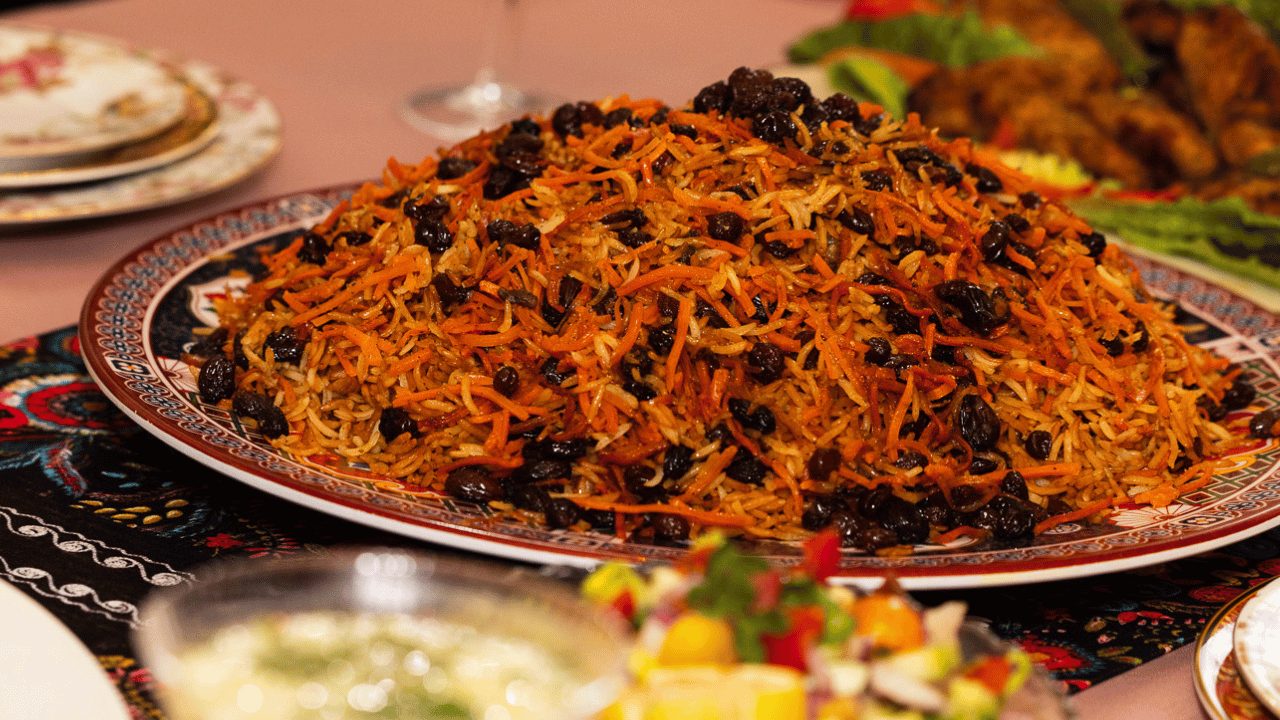
If Afghanistan has a single national dish, it is kabuli pulao — a mountain of long-grain basmati rice cooked in a rich lamb broth, layered with caramelised julienned carrots and golden raisins, and crowned with fried slivered almonds. The technique is what elevates it: the rice is par-boiled, then steamed over the braised lamb so it absorbs the meat juices and fat as it finishes cooking. The result is rice that is golden, fragrant, and impossibly flavourful, with each grain separate and glistening. The carrots must be cut into long, thin matchstick strips — not diced, not grated — and fried slowly in oil until they caramelise at the edges. This is what gives kabuli pulao its distinctive appearance and sweetness. The raisins are added toward the end so they plump without burning. The lamb is braised separately with onions, garlic, and a restrained spice mix of cumin, coriander, and black cardamom until it falls apart at the touch of a fork.
2. Mantu — Steamed Lamb Dumplings
Mantu are large steamed dumplings filled with a mixture of finely minced lamb, diced onion, and spices — typically cumin, coriander, salt, and black pepper. The dough is rolled paper-thin and cut into squares, each filled and pinched shut, then arranged in a multi-tiered steamer and cooked over boiling water for forty to forty-five minutes. What makes mantu distinctive is the topping: a thick, earthy split-pea dal is ladled over the dumplings, followed by a generous drizzle of garlicky yoghurt sauce and a final scatter of dried mint and chilli flakes. The combination of soft dough, rich lamb filling, earthy legume sauce, and cold tangy yoghurt creates a layered experience of flavour and texture unlike anything in the Chinese or Japanese dumpling traditions. Make twice as many as you think you need — they freeze beautifully uncooked and steam from frozen with just a few extra minutes.
3. Bolani — Stuffed Flatbread
Bolani is a thin flatbread stuffed with a savoury filling and fried in a shallow pan until crisp and golden on both sides. The most common fillings are mashed potato with leek, seasoned spinach, or pumpkin. The dough is a simple mix of flour, water, salt, and a little oil, rolled out as thin as possible so the filling is the star. The key is to get the pan hot enough to crisp the outside in two to three minutes per side while the filling heats through. Bolani is served as a side dish or a snack, always with a bowl of thick yoghurt for dipping, and it is one of the easiest Afghan dishes to make well on your first attempt.
4. Aushak — Leek Dumplings
Aushak are the vegetarian cousin of mantu — same shape, same steaming technique, same yoghurt-and-dal topping, but filled with chopped leeks seasoned with salt and a little chilli instead of lamb. The leek filling is lighter and more herbal than the meat version, and many Afghans actually prefer aushak for everyday eating, reserving the richer mantu for special occasions and guests.
5. Shorba — Lamb and Vegetable Soup
Shorba is the Afghan answer to comfort food — a slow-simmered soup of lamb on the bone, potatoes, carrots, tomatoes, and onions, seasoned simply with turmeric, black pepper, salt, and sometimes a little dried dill. The lamb cooks for at least two hours, until the meat is falling off the bone and the broth is rich and golden with rendered fat. This is the dish every Afghan household makes when someone is ill, when the weather turns cold, or when there is nothing much in the kitchen but a piece of bone-in lamb and whatever vegetables are to hand. It is utterly simple, deeply nourishing, and impossible to get wrong.
6. Chapli Kebab — Spiced Meat Patties
Chapli kebab is a large, flat patty of minced beef or lamb, heavily spiced and fried until crisp on the outside and juicy within. The spice mix is what sets it apart: crushed coriander seed, whole cumin, dried pomegranate seeds, finely chopped fresh green chillies, sliced onion, and sometimes chopped tomato are mixed directly into the meat. The patties are pressed very thin — about one centimetre — and fried in a generous amount of oil until deeply browned. They are served in fresh naan bread with sliced raw onion, tomato, and a squeeze of lemon. Chapli kebab is street food in Afghanistan, sold from stalls and small shops, and it is one of the most satisfying things you can cook on a weeknight at home.
7. Firni — Rosewater Milk Pudding
Firni is the traditional Afghan dessert — a delicate milk pudding thickened with cornstarch rather than rice, flavoured with rosewater and ground green cardamom, and topped with a shower of crushed pistachios. It is served cold, in shallow ceramic bowls, and it is the customary finish to a large meal. The texture should be just set — firmer than a panna cotta but softer than a blancmange — and the rosewater should be noticeable but not overpowering. Use a light hand with the rosewater; it is always easier to add more than to fix a pudding that tastes like perfume.
Where to Find Authentic Afghan Ingredients
Most of these dishes require only common kitchen staples, but a few Afghan-specific ingredients make a real difference to authenticity: green cardamom pods, dried leek, ground coriander, good saffron, dried mint, and the particular variety of long-grain rice used in pulao. All of these are available at AfghanOutlet, sourced directly from Afghan growers and spice merchants, and shipped to your door.