
What Is Ikat Weaving? Central Asia Textile Art

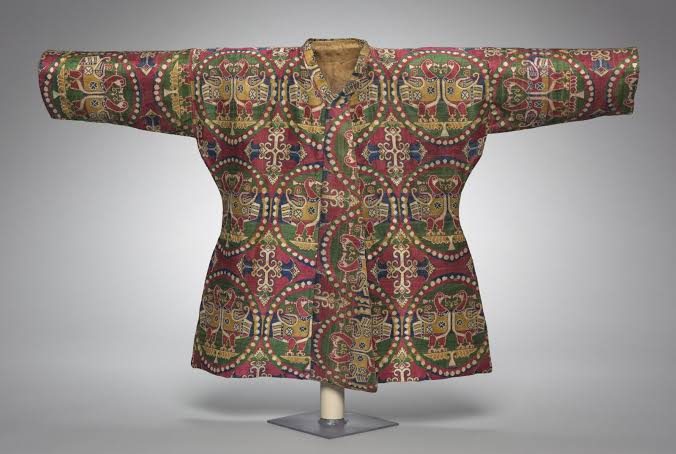
Ikat is one of the oldest, most technically demanding, and most visually distinctive textile techniques in the world. The word itself comes from the Malay-Indonesian word “mengikat,” meaning to tie, bind, or wind, but the technique has been practised independently across a vast geographic range — from Central Asia to Southeast Asia, from Japan to West Africa to Central and South America — for at least a thousand years, and probably far longer. In Central Asia, and particularly in Afghanistan and Uzbekistan, ikat weaving represents one of the great high points of the textile tradition, producing fabrics of extraordinary colour and visual energy that are prized by collectors, designers, and museums around the world.
How Ikat Works: The Fundamental Principle
In most textile patterning techniques — block printing, screen printing, batik, digital printing — the pattern is applied to the surface of the cloth after it has been woven. The fabric is produced first, as a plain white or solid-coloured ground, and the design is added to the finished surface in a separate step. Ikat reverses this process completely. The pattern is created in the threads themselves, before they are mounted on the loom and before any weaving takes place. The finished cloth emerges from the loom already patterned, with the design embedded in the structure of the weave rather than sitting on its surface.
The process works like this:
- Planning the design. The weaver determines the pattern and calculates where each colour must fall on the finished cloth. This requires a high level of spatial reasoning, because the design must be visualised in terms of individual thread positions rather than as a continuous surface.
- Binding. The threads that will form the warp (the lengthwise threads on the loom) are stretched out in a frame. Sections of the thread bundle are then wrapped tightly with strips of resist material — traditionally palm leaf, banana leaf, or waxed string — so that dye cannot penetrate the wrapped areas. The wrapped sections will remain undyed, while the exposed sections will absorb the colour.
- Dyeing. The bound thread bundle is submerged in a dye bath. The exposed sections absorb the colour; the wrapped sections resist it and remain the original colour of the thread (usually white or cream).
- Re-binding and re-dyeing. For designs with multiple colours, the process is repeated. Different sections are wrapped and unwrapped for each dye bath, building up the colour pattern step by step. A design with five colours requires five separate cycles of binding and dyeing, each of which must align precisely with the previous cycles.
- Weaving. The dyed threads are removed from the frame, carefully aligned on the loom so that the colour patterns match, and woven into cloth. This alignment is the most critical step — even a slight misregistration of the threads produces a blurred or shifted pattern.
The Characteristic Blur
The most visually distinctive feature of ikat cloth is the soft, feathered edge that appears at every colour boundary in the pattern. This blur is not a printing error or a sign of low quality — it is the inevitable and characteristic result of the ikat technique itself. Because the pattern exists in individual threads rather than on a continuous surface, even the most skilled weaver cannot align every thread with perfect precision. Tiny shifts of a fraction of a millimetre accumulate across the width of the cloth, producing the distinctive haze or bleed at the edges of each colour block. This blur is the hallmark of genuine ikat and the primary reason collectors and textile scholars value it — it is physical proof that the cloth was made by the resist-dye-before-weaving method and not simply printed to imitate the ikat look.
Warp Ikat, Weft Ikat, and Double Ikat
Ikat can be applied to the warp threads (the lengthwise threads), the weft threads (the crosswise threads), or both:
- Warp ikat is the most common form in Central Asia, including Afghanistan and Uzbekistan. Only the warp threads are resist-dyed before weaving. The weft threads are typically a single solid colour. This produces a pattern that is slightly blurred horizontally (along the weft direction) but crisp vertically (along the warp direction).
- Weft ikat reverses this — only the weft threads are dyed, and the warp threads are solid. This is more common in parts of Indonesia and produces a pattern that is blurred vertically rather than horizontally.
- Double ikat is the supreme test of the ikat weaver’s skill. Both the warp and the weft threads are resist-dyed and then aligned on the loom so that the patterns in both sets of threads match at every intersection. This is extraordinarily difficult and time-consuming, and genuine double ikat textiles are rare and highly prized.
How to Spot Genuine Handmade Ikat
With the growing popularity of ikat as a design motif, printed fabrics that imitate the ikat look have become widespread. These are ordinary machine-woven or machine-knitted fabrics with an ikat-style pattern printed onto the surface. Telling the difference is straightforward if you know what to look for. First, examine the pattern repeat. On genuine ikat, each repeat of the pattern drifts slightly from the last, because the threads are aligned by hand and perfect registration is impossible. On printed fabric, the repeat is identical every time, because the printing machine applies the same image with mechanical precision. Second, check the selvedge — the finished edge of the cloth. Handloom cloth has a natural, slightly uneven selvedge where the weaver turned the weft thread at the edge of the warp. Mill cloth has a clean, machine-finished selvedge. Third, look at both sides of the fabric. On genuine ikat, the pattern is visible on both sides, though it may be slightly less distinct on the back. On printed fabric, the pattern is vivid on the front and faint, absent, or completely different on the back.
Shop hand-loomed ikat silk scarves and textiles from Mazar-i-Sharif at AfghanOutlet, with every piece guaranteed handmade and hand-dyed.