
Afghan Saffron vs Iranian Saffron

For decades, Iranian saffron has dominated the global spice market, accounting for more than ninety per cent of the world’s supply. It has been the default choice for chefs, spice merchants, and consumers everywhere. But over the last ten years, a quiet revolution has been underway in the fields of western Afghanistan, and the numbers are starting to tell a very different story. Afghan saffron from Herat Province has consistently won top marks at international quality competitions — including gold medals at the Monde Selection and the International Taste Institute in Brussels — and a growing number of professional kitchens and specialty retailers are making the switch.
The Geography Advantage
The saffron crocus, Crocus sativus, is a remarkably demanding plant. It requires cold winters to trigger dormancy, dry summers to prevent bulb rot, and well-drained soil to keep the root system healthy. Herat Province, in the far west of Afghanistan, sits on a high arid plain at roughly nine hundred metres above sea level. Winters are freezing, summers are bone-dry, and the soil is naturally alkaline and fast-draining — almost exactly the conditions the crocus evolved to thrive in. Iranian saffron is grown in Khorasan, which shares a similar climate, but Herat’s slightly higher altitude and more extreme temperature swings appear to stress the bulbs in just the right way, concentrating the chemical compounds that give saffron its colour, flavour, and aroma to unusually high levels.
Understanding the Grades
Before comparing Afghan and Iranian saffron, it is essential to understand the grading system. Saffron is graded by which part of the stigma thread is retained after harvest and processing:
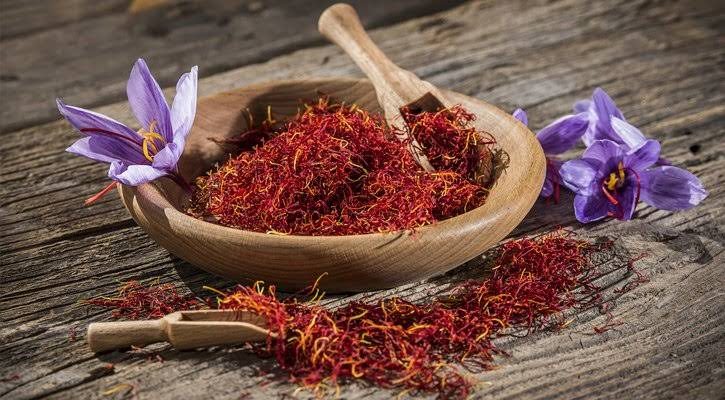
- Sargol (Grade 1) — only the very tips of the stigma, deep red with no yellow style attached at all. This is the grade with the highest concentration of crocin, picrocrocin, and safranal, and it commands the highest price.
- Negin (Super Grade) — long, uniformly red threads with no yellow. Visually impressive and often sold at a premium to the luxury market, though the chemical profile is similar to Sargol.
- Pushal (Grade 2) — the red stigma with some of the pale yellow style still attached. Less potent per gram because the yellow part contributes weight but little colour or flavour.
- Bunch (Grade 3) — the entire stigma thread, red and yellow together, tied in a small bundle. The weakest grade in terms of flavour per gram, though it is the least processed and the cheapest.
When comparing Afghan saffron to Iranian saffron, make sure you are comparing the same grade. Sargol against Sargol is the only fair test. Comparing Afghan Sargol to Iranian Pushal will always favour the Afghan product, but that comparison is meaningless.
Crocin, Picrocrocin, and Safranal: The Three Compounds That Matter
Saffron quality is measured by three chemical compounds, each contributing a different sensory dimension to the spice:
- Crocin is the compound responsible for saffron’s intense red-gold colour. It is measured on the ISO 3632 standard, which rates colouring power on a numerical scale. Top-tier Afghan saffron routinely measures above 240 on this scale; good-quality Iranian saffron typically sits in the range of 220 to 235. The difference is visible in the kitchen — Afghan saffron produces a deeper, more intense gold in rice dishes, broths, and desserts.
- Picrocrocin is the compound behind saffron’s distinctive bitter taste. It is what gives saffron its flavour complexity and prevents it from being merely a colouring agent. Afghan saffron generally scores higher on picrocrocin than Iranian saffron at equivalent grades, which translates into more flavour impact per pinch.
- Safranal is the volatile compound responsible for saffron’s aroma — that unmistakable honeyed, hay-like scent. Safranal levels are closer between Afghan and Iranian saffron than the other two compounds, but independent lab analyses published in the Journal of Food Science and Technology have shown Afghan samples trending slightly higher on average.
Why Is Afghan Saffron Cheaper?
If Afghan saffron often matches or exceeds Iranian saffron on every measurable quality indicator, why does it sell for less? The answer has nothing to do with quality and everything to do with market positioning. Iran has had decades to build brand recognition, establish global distribution networks, and invest in marketing. “Iranian saffron” is a phrase that carries weight with consumers who have never heard of Herat. Afghanistan is a newer entrant to the export market, and its saffron industry — though growing rapidly — lacks the branding and infrastructure of its Iranian competitor. For a buyer, this gap between quality and price is an opportunity. You are getting the same or better product for significantly less money, simply because the brand has not yet caught up with the lab results.
How to Use Saffron Properly
Regardless of origin, saffron must be used correctly to deliver its full potential. The most common mistake is adding dry threads directly to a hot pan, which destroys the volatile aromatic compounds before they have a chance to infuse the dish. Instead, follow this method:
- Crush the threads to a fine powder between your fingers or with the back of a spoon.
- Place the powder in a small bowl and add two tablespoons of warm — not boiling — water or milk.
- Let it steep for at least twenty minutes, or up to two hours for maximum extraction.
- Add the liquid and the dissolved threads together to your dish, late in the cooking process. For rice, add it after the rice has absorbed most of the water. For stews, add it in the last ten minutes.
A pinch of fifteen to twenty threads is enough for a dish serving four people. If you find yourself needing significantly more than this to achieve colour and flavour, the saffron you are using is either low-grade or adulterated.
How to Spot Fake Saffron
Adulteration is the saffron industry’s biggest problem, and it affects Iranian and Afghan products equally. Common tricks include dyeing corn silk or safflower petals to resemble saffron threads, soaking real threads in sugar water or honey to increase their weight, and mixing a small amount of genuine saffron with a large amount of coloured filler. To protect yourself, perform this simple test: drop a few threads into a small glass of warm water. Genuine saffron releases its colour slowly, over the course of several minutes, and the threads themselves remain red throughout the process. If the water turns bright yellow instantly, the threads have been dyed. If the threads lose all colour and turn white or translucent, they have been soaked in a colouring agent that washes off. If the water develops an oily surface, the threads have been treated with glycerine or oil for weight.
Shop genuine Grade 1 Sargol saffron from Herat at AfghanOutlet, with the grade, harvest year, and laboratory crocin score printed on every sealed tin.